Advertisement

Showing posts with label hawker food. Show all posts

Monday, 12 October 2015

Where to Eat, Caffeinate and Stay in George Town, Penang: An Opinionated List


David-hagerman-char-koay-teow-at-night-penang-2013
    My experience of George Town is somewhat unique; I've been fortunate to know the city as a tourist, a food/travel writer on assignment and now, as a resident. I know what I like as someone who lives right in the heart of the city right now. But I also remember what struck me as an observer keen on finding a story, and what I wanted from and liked best about the city as a traveler without a mission.
    Every week I receive emails asking for recommendations -- for restaurants and hawker stalls, for hotels, for non-street food places to eat. There's already loads of Penang and George Town info on this blog as well as in articles I've written for the New York Times, SBS Feast, Wall Street Journal Asia,Travel+Leisure Southeast Asia and other publications. But now, as tourism to the UNESCO world heritage site I call home seems to be building momentum, it seems a good time to pull some loose ends together into a post that will, hopefully, insure visitors leave George Town loving it at least a fraction as much as I do.
    If you're planning a visit to Penang know first that George Town is the place to stay. The island's beaches just don't rate, especially when compared with others in the region. Penang is an increasingly urbanized island half of whose coastline is separated from a busy shipping port by a well traversed strait.-- which doesn't make for pristine waters. And, unfortunately,increasingly larger swathes of the island are falling to unsightly development; head north from George Town past kilometer after kilometer of eyesores and you'll see what I mean. Sure, there are spots outside George Town worth visiting: Balik Pulau, durian farms (in season), Penang Hill (not on a weekend!) .... but all can be done comfortably in a day trip.
 Penang_Malaysia_Hagerman (2)
George Town: a mostly lowrise, very walkable city. Red tile roofs mark old shop houses.
    Despite gentrification and a serious overstock of boutique hotels and cafes and trinket shops -- and the resultant loss of many long-time residents -- George Town is still, somehow, very 'real'. Moreover it is unique in the region for its historically rich (and fairly intact) cityscape, loads of authentic (ie. not designed for tourists) "street theater" and fabulous food, especially on the street. 
    Best of all, George Town is completely walkable. A leisurely stroll from one end of the UNESCO conservation zone to the other will take only an hour or so.
Penang_Malaysia_Hagerman (12)
EAT
    This list is far from comprehensive, it could extend for pages. But a gal has to keep some secrets. I won't claim that any of these spots are The Best this or that, but they are places I, and folks whom I refer, consistently enjoy. There's enough here to keep you busy and well-fed for a good 3 days or so. Addresses are listed or are to be found in links.
Tek Sen
Penang_Malaysia_Hagerman (9)These days you'll rarely find Tek Sen this quiet
    Our first meal here was in 2009, back when Teochew-Chinese-Malaysian restaurant Tek Sen was a glorified stall with tables occupying an alley and a five-foot way, before it had a Facebook page and an illustrated menu and a few years before its mention in a Lonely Planet guide made tourists as often seen here as locals. When Tek Sen tripled its capacity by relocating to its current double shophouse premises we feared the worst. But quality has remained high, probably because the family that opened the place 25 or so years ago is still on hand, in the kitchen and the front of the house, to insure that your bacon candyis every bit as savory-salty-sweet-lardy as it should be.
    These days the queues can be gruesome, so go early (around 6pm), late (around 830pm but beware -- customers are often turned away by 8:45), or for lunch. After all these years Tek Sen is still the first place we take visitors, and for good reason.
Penang_Malaysia_Hagerman (10)
A more typical Tek Sen scene
    Some of our favorite dishes from a very long menu: Teochew steamed fish, gulai tumis, French beans stir-fried with pork, steamed homemade tofu, pork belly with preserved mustard, potato leaves stir-fried with sambal, bean sprouts with salted fish, tamarind prawns and whatever's on the white board.
Note: I'm suspending my recommendation of this restaurant based on a few reports I've received recently from readers. We're soon leaving George Town for a couple months so I won't be able to verify, but for now dine here at your own risk. And if you have a good -- or bad -- experience please let me know by email (robyn.eckhardt@gmail.com) or in the comments section below. Thank you!
David-hagerman-asam-fish-pulau-tikus-penang-july-18-2013Achar hu: fried fish marinated in turmeric-vinegar oil with garlic, ginger and chilies
    For our money the best Penang Nyonya food, cooked by a real Penang Nyonya, is to be found at Pulau Tikus market. But a close second best, and heads and shoulders above the unremarkable grub served at other Nyonya restaurants on the island, comes out of the kitchen of a Peranakan home that doubles as a bird's nest distributor and restaurant. Mom -- along with aunties, sisters, etc. -- is in the kitchen, and when we reserve (and you do need to reserve) we ask for a table in the back with a view into her workspace rather than one among the somewhat creepy displays of bird's nest up front. Their "very hot" sambal belacan is the spiciest thing we've ever eaten in Malaysia. We love it.
Toh Yuen, Campbell Street near Cintra
    Go to this old Cantonese spot for the tea and the atmosphere -- plenty of old-timers while away hours here. There is poached and roast chicken rice which is good but not as good as that at Keng Pin (see below), and the odd dim sum and pork buns which are OK, and fish ball soup which contains housemade fish balls and is stellar. If you like hot and sour flavors ask for kiam chai boi, a soupy Hokkien "leftovers" dish of meat (duck, here) cooked with mustard greens, chilies, tamarind, asam keping ("sour slices") and chilies. Noodle dishes are good too.
David-hagerman-gado-gado-international-hotel-penang-may-25-2013Gado gado on the left, pineapple curry on the right, fried fish up top 
    Simply the best nasi campur ("mixed rice", ie. rice and curries) in George Town. The owners of this stall migrated a couple decades ago from Sumatra, and the Indonesian island's influences come through in dishes like tempeh with green chilies, long eggplants fried to silkiness and doused with fiery red chili paste, beef jerky deep-fried with chilies and an addictive sambal made with grilled green chilies and tiny fish. Pineapple curry, whole round eggplant in an Indian-ish curry leaf-flecked curry, chicken cooked with kecap manis and red chilies and fresh pineapple achar say "Malaysia". The amazing spread includes several types of whole fish, a few different sambals and plenty of vegetarian options including, on weekends, do-it-yourself gado gado. Open till 4 or 5, but this is really a lunch place. Go by noon for the best selection. (Read more here.)
Penang_Malaysia_Hagerman (4)
Cozy seating and darned fine nasi campur at International Hotel
Veloo Velas, Little India (Penang Street near Bishop)
    I have to admit that I haven't frequented Veloo Velas much since an unfortunate refurbishment turned it from a pale blue and pink-painted six-table establishment that transported me to southern India, to a blandly tiled two-room restaurant. But I recently stopped in after a long absence and I'm happy to report that the thosai are still among the best in town. My favorite is the masala thosai, served mornings only (as are all tiffin, replaced by rice meals around noon), for its heavily spiced vegetable filling. You'll know this place by the thosai griddle out front.
Nasi Kandar at Toon Leong Cafe
    I know what you're wondering and no, Anthony Bourdain did not eat here. Who cares? This little stall, run by the grandson of its founder, is parked at kopitiam (coffee shop) run by the son of the guy who opened it over 80 years ago. Service is mornings only, most things are sold out by ten. I love the super tender spicy beef curry and the eggplant, but I'd go with pretty much anything this guy dishes up. Toon Leong's strong kopi beng (iced coffee with sweet milk) sipped while sitting in one of the coffee shop's unironically vintage booths is a bonus. 
Hainan chicken rice at Keng Pin on Penang Road
David-hagerman-chicken-rice-george-town-penang-june-7-2013
    Hainan chicken rice may be Singapore's national dish but we're lucky to have a mighty excellent version here in George Town. If you're one of those folks who doesn't "get" this dish try the version here, served from about 1130am (Mondays off) by an intense couple who don't smile much but do know how to delicately poach a chicken to barest doneness and cook rice in the bird's broth with garlic to perfection, grains tender and separate. The sourish chili sauce is nice too. Specify when you order, breast or other part, with or without skin.
Curry Mee (on the same street as "Famous Cendol" -- see below -- off Penang Road)
David-hagerman-curry-mee-george-town-penang-may-29-2013
    I love Eng, the bubbly woman who runs this stall, and I love her curry meeeven more. She used to park her stall on Cintra Street, but moved when the building behind her was refurbished. I thought she was gone forever until we stumbled upon her current location, in front of a cute little shop house whose three tables offer a cool, quiet respite from George Town's hot noisy streets. Be sure to order the loh han goh, an (admittedly pretty sweet) herbal drink made with a dried medicinal fruit that is said to be cooling -- more so if ordered with ice. Read more here.
Char Siew on Carnavon (corner of Cheong Fatt Tze / Hong Kong Street)
David-hagerman-char siew-roast duck-georgetown-penang-may-14-2013
    Arrive to this coffee shop by 12:15 or you'll end up waiting quite a while for your sweet-sticky pork. All hell breaks loose when this vendor, one of the few in George Town to BBQ his pig Kuala Lumpur-style (rather than Hong Kong style, sans sugar and rimmed in red) arrives at 12:30, unpacks roast pork, char siew and roast duck from his motorbike and hangs the meat in his glass display case. For my money the roast pork is not quite as impressive as the char siew, but it certainly isn't awful. The duck is very good, but nowhere near as tasty as that cooked over charcoal at Kuala Lumpur's old Sek Yuen restaurant. But then again I'm not sure there's a roast duck in Malaysia to match Sek Yuen's.
Asam laksa at Weld Quay
    Judgment of whether or not an asam laksa is "good" or "bad" or somewhere in between comes down to chilies, tamarind (and/or asam keping, aka "sour slices") and fish. I like mine spicy, tart and full of piscene flavor. If you do too get your asam laksa at the stall that parks at the corner of Weld Quay and Aceh from around 2 in the afternoon until 5. Read more here. Across the street find tasty fried bananas.
Cendol on Burma Road at Lorong MacAlister 
Penang_Malaysia_Hagerman (5)
    There may once have been a day when George Town's "famous" cendol, located on a lane just off Penang Road, was famous for a reason other than that it's famous, but that day is gone. Watery coconut milk, suspiciously vividly green mung bean "pasta" and sloppy presentation (the latter due, I suppose, to the need for speed to appease the inexplicablly huge crowds that mob this stall) make this version a No-Go for me.
    Do yourself a favor: bypass the crazy queue. Walk right past and take a right at the flyover. Three or so blocks up Burma Road, on your left, you'll find a cart whose owners dish up a cendol worth your money. The wait is short, the coconut milk is thick and rich and the gula Melaka is deep and butterscotchy. After 12pm, odd off days. (Thanks to Bee of Rasa Malaysia for this tip.)
CAFFEINATE
    Over the past 18 months George Town has seen a rash of cafe openings. Too bad the coffee served at most is not worth my time or my money. After paying 19 ringgit last week at a newish cafe for a glass of meek and weak iced drip, I'm sticking with the tried and true.
David-hagerman-gula-melaka-ice-cream-China-House-GeorgeTown-Penang-May-3-2013
    The owner of China House is an Australian caffeine addict and her love of the bean comes through in the coffees served at the cafe. Her baristas know what they're doing and the beans are imported from a boutique roastery in Singapore. (Desserts and homemade ice creams are a bonus.) And if you can catch it open, the owners of Ete Cafe, a blink and you'll miss it spot on Lorong Carnavon off of Carnavon Street, lend their uniquely Taiwanese love of coffee to brewing a very good cup. His beautiful French pastries and macarons and her quiche (both trained at Le Cordon Bleu) are a bonus.
STAY
    I haven't checked the prices listed on hotel websites lately but these hotels/lodgings are meant to be listed most expensive to least expensive. (I'm not including the E&O because who doesn't know about the E&O? It's George Town's colonial grande dame, boasts the city's biggest swimming pool with a fine location right on the water and has a health club. But it's a bit too stuffy and way to big for my taste.)
    My bias is towards smallish, unique hotels that are the result of a sensitive/smart refurbishment of older structures by owners who've really put their heart(s) into the project. There's a lot of sub-par refurbishment going on in (formerly) lovely old buildings around town; know when you book a hotel that the word "heritage" in its name guarantees nothing.
    All of these spots are conveniently located right in the middle of the world heritage site. I've viewed them and I get frequent feedback on service and comfort from guests who take my food walks. (Know that whether traveling as a journalist or a blogger I don't solicit complimentary food/lodging.)
    Posh and private, sited behind a massive wooden gate at the upper end of hostel-choked "Backpacker Street", 23 Love Lane has spacious rooms in a refurbished bungalow and attached wing. Despite its exclusivity the hotel doesn't feel stuffy. Rooms and public spaces are washed in bright colors and are furnished with a great mixture of antique and mid-century pieces. A recent change of ownership may have affected service but recent street food walk clients have been happy here.
    Stunning suites with very cool black and white mosaic tiled bathrooms arranged around a long courtyard on the second story of seven rebuilt terrace houses. Very private (only guests and their guests are allowed beyond the bar and restaurant) with a small pool. Read my full review for Wall Street Journal Asia here.
Penang_Malaysia_Hagerman (7)
    I included this early comer to George Town's boutique hotel scene in my NYTimes Travel "36 Hours in Penang" piece, which last year was republished in a book of 36 Hours pieces. As such rooms here can be hard to come by but it's worth trying, because Campbell House is small and intimate and the welcome is warm, thanks to the hands-on management style of its Malaysian and Italian owners.
Penang_Malaysia_HagermanRen I Tang lobby
    Fabulously located in Little India, which to my mind is one of George Town's main attractions, the rooms at this refurbished Chinese medicine hall are as beautiful as they are comfortable, and are varied in size and configuration so as to accomodate the needs of single travelers and families as well as couples. The cafe downstairs is a great spot in which to cool off (passion fruit soda highly recommended) while people watching.
    Newish Sin Keh describes itself as a "guest house" but has all the comforts of a hotel; it occupies a stylishly refashioned old shop house sited in a neighborhood not yet pocked with same-same cafes and trinket stores. There's an arts workshop and performance space in the hotel, which makes for a good crowd. The vibe  is laid back and friendly and the roof deck is a great place to relax at sunset with a drink. As one who often finds that the problem with hotels is not the hotel but inconsiderate guests I appreciate Sin Keh's "Quiet at Night" policy.

Saturday, 3 October 2015

Gerai Pak Lang Ikan Bakar @ Kampung Baru

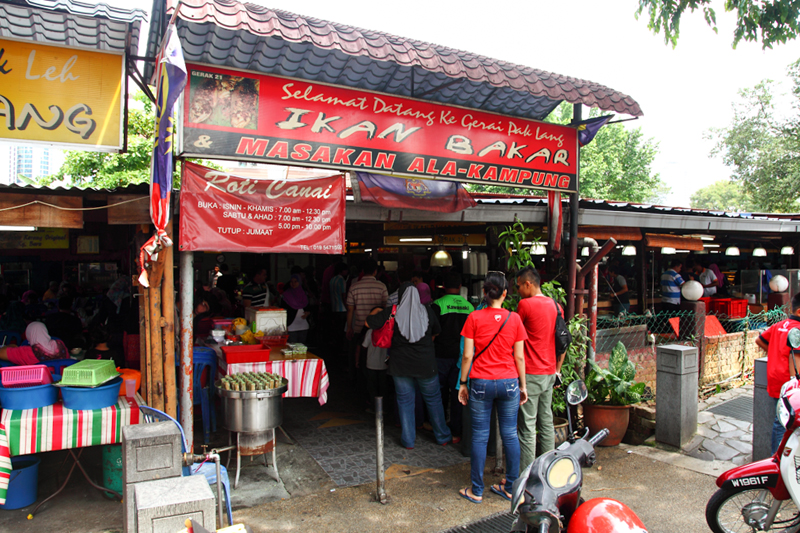
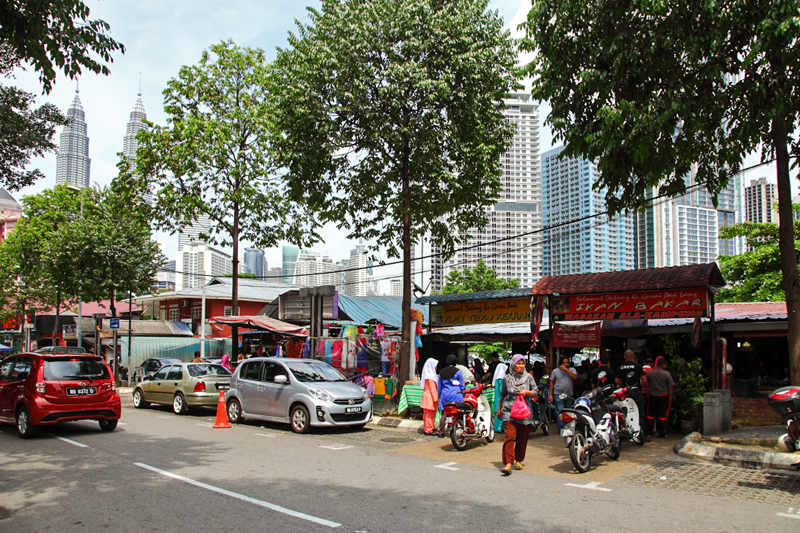
Gerai Pak Lang Ikan Bakar has got to be the busiest place to eat in Kampung Baru. Even though it was pretty late for lunch, customers just kept pouring in and the line never seemed to shrink all the time we were there. I think the only other eatery in KL that could rival this place in terms of crowd is Sambal Hijau.

Grilled-Stingray
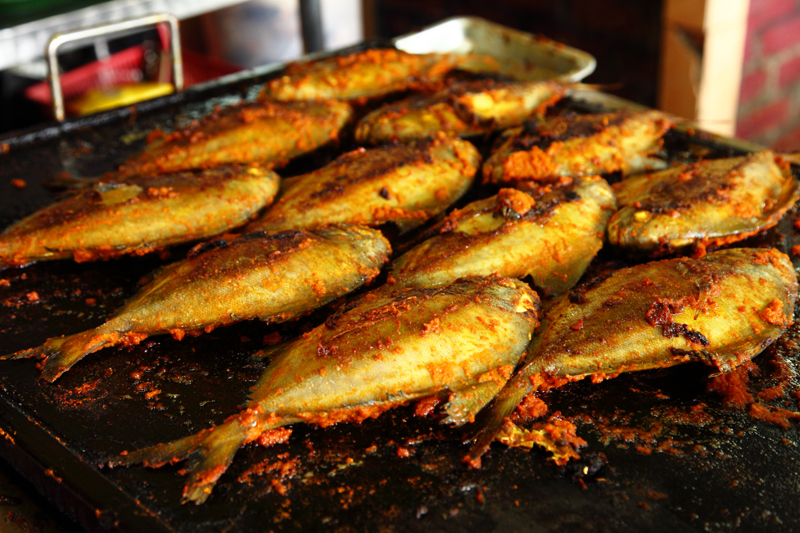
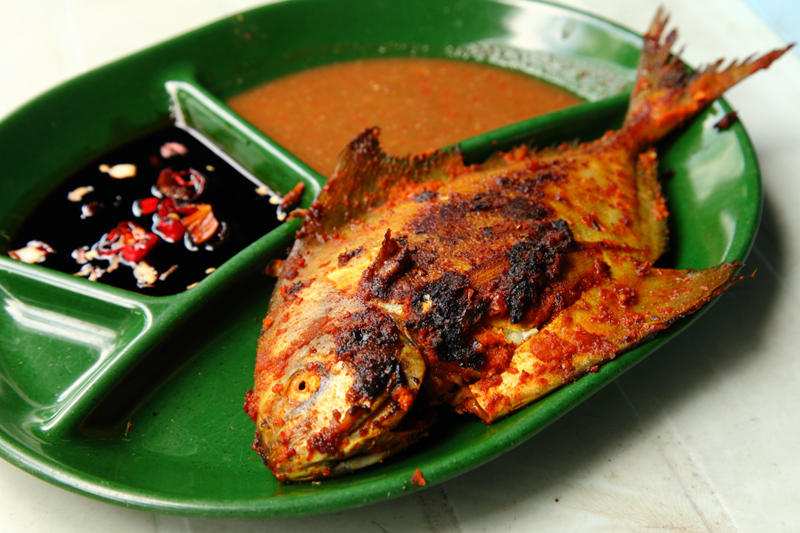
There are about 10 types of fish to choose from and from what I saw, all of them are cooked separately. If you’re looking for pari but none is available, then you need to wait for the next batch. Before going on the grill, the fishes are simply given a quick bath of marinade, which is quite different considering most vendors use pre-marinated fish.
Grilling-Fish-Kampung-Baru

Grilling-Black-Pomfret

Ikan-Pari-Bakar
Anyway, the most expensive fish is terubuk @ RM15 while the cheapest ones are kembung and keli, both priced at RM7. The rest are between RM8-RM10 for the likes of bawal, talapia and cencaru. The prices are alright if you ask me.
Choosing-Malay-Dishes

Choosing-Dishes
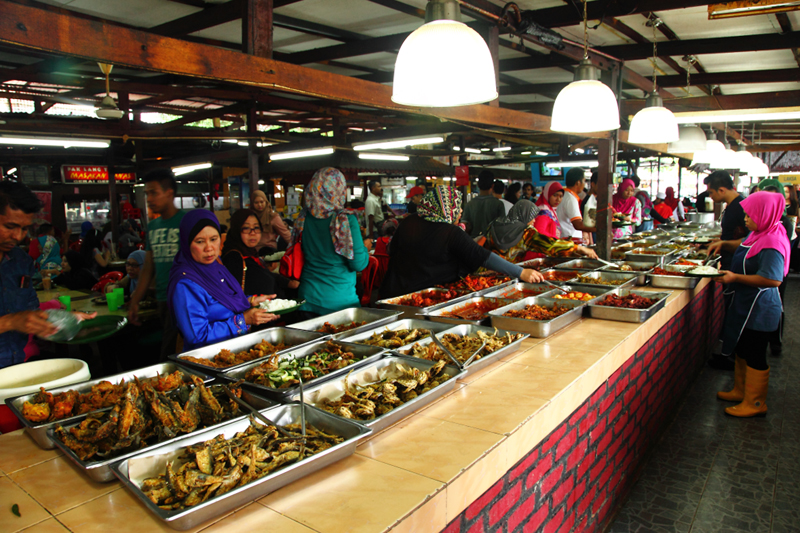
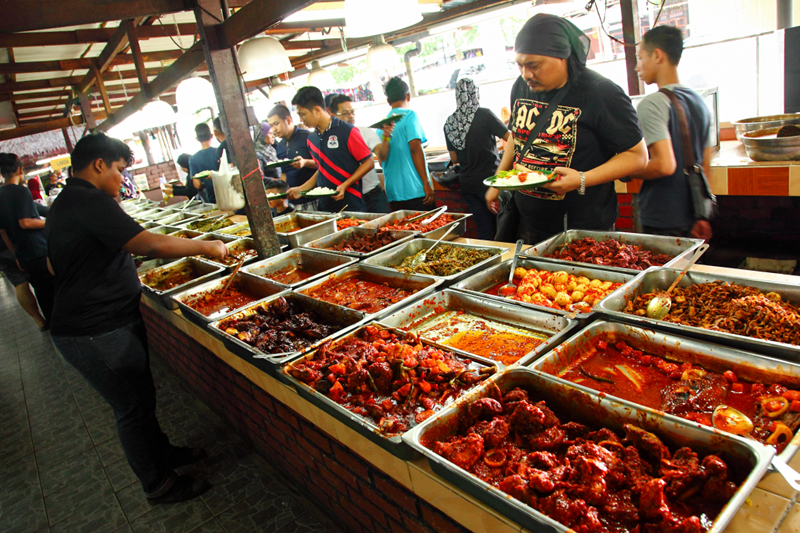
Besides grilled fish, nasi campur is also available here with easily 50 dishes to choose from. I know that sounds a little far fetched but wait till you see the number of trays laid out in the spread.
You’re pretty much spoilt for choices with all kinds of dishes imaginable prepared with chicken, beef, lamb, seafood and vegetables. They won’t win any awards for cleanliness but from what I observed, there weren’t any flies seen around the food – that’s always a good sign.
Malay Rice with Grilled Fish
Based on a few dishes we had, I wouldn’t say the nasi campur is delicious but it’s not bad. We had a bowl of sup tulang which was great and we enjoyed the aromatic blend of spices and herbs in it.
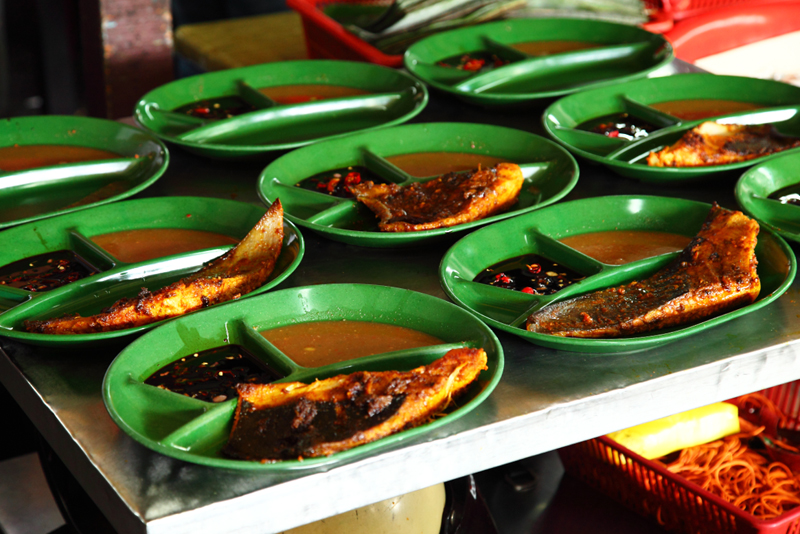
The grilled stingray on the other hand, was expectedly good, nicely cooked with only a little charred bits and most importantly, fresh. As for the dipping sauces, both the chilli and tamarind sauce worked wonderfully to kick up the flavours.
Ikan-Bawal-Bakar
At first we thought the bawal didn’t look so good but since it was the only other fish ready at that time, we took it anyway. As it turned out, the bawal was more enjoyable than the stingray simply because the flesh had a firmer texture and stronger flavour of its own. With fish as fresh as this, there’s hardly any room for them to screw it up.
Pak-Lang-Ikan-Bakar-Food-Court
Although the food court is enormous with plenty of tables, looking for a place to sit might still be a challenge due to the huge number of customers. If unlucky, you might have to sit at the edge of the restaurant where it’s quite dirty.
Gerai-Ikan-Bakar-Pak-Lang

Kampung-Baru-Ikan-Bakar
When I asked about their operating hours, I was told by one of the staff that they are open for 24 hours a day. However, I am a bit sceptical about that so to be safe, I think it’s better to come come during the ‘normal’ meal hours.
Gerai Pak Lang Ikan Bakar & Masakan Ala Kampung
Jalan Raja Muda Musa,
Kampung Baru, 50300 Kuala Lumpur

Friday, 2 October 2015

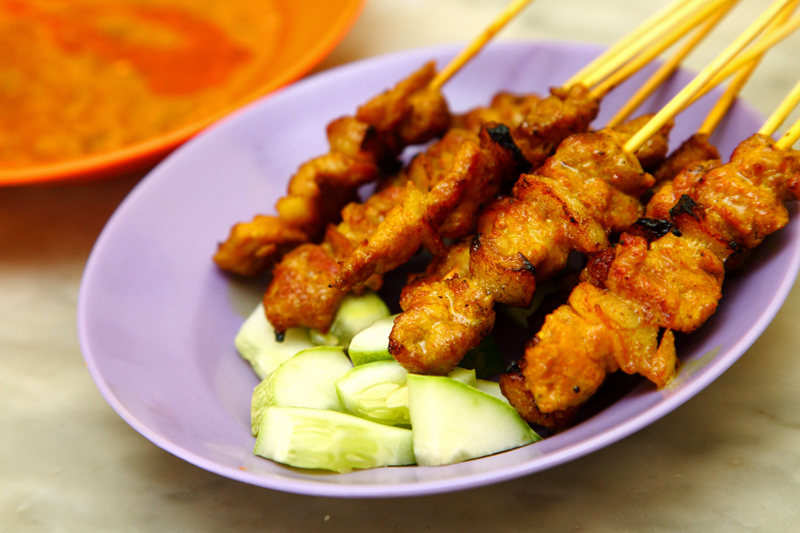
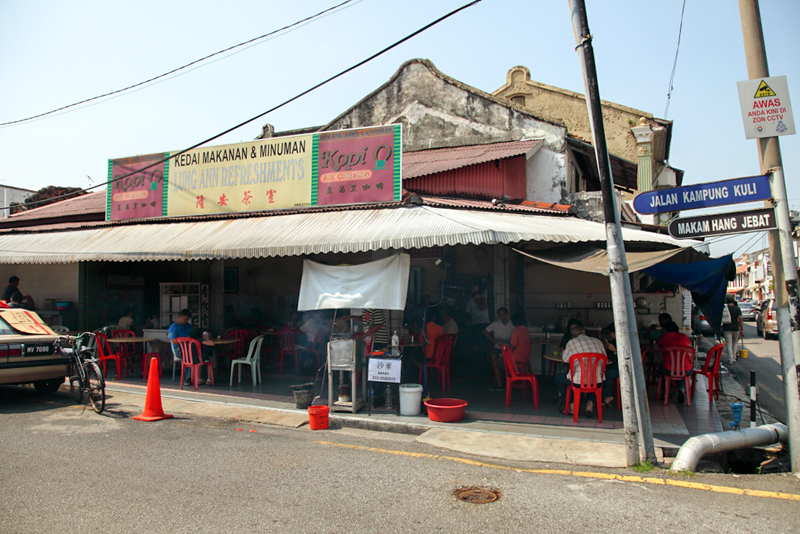
Pork Satay @ Lung Ann Refreshments, Melaka

The pork satay at Lung Ann Refreshments coffee shop had been on my list of food to try inMelaka for years. But for some reasons they were either closed or not open whenever we tried to eat here due to their erratic business hours.
Ironically, they were open during my impromptu visit to Melaka few weeks ago so I finally got to try their famous pork satay. I guess plans are overrated sometimes.
Lung-Ann-Pork-Satay
I am not sure why, but Melaka is particularly popular for pork satay, which is also known as Nyonya satay. I mean, it’s not something that’s only available in Melaka but somehow visitors just have their mind set on having some pork satay before going back home. Personally, I think it’s worth a try if you haven’t yet because it’s unique in its own special way.
Price-List
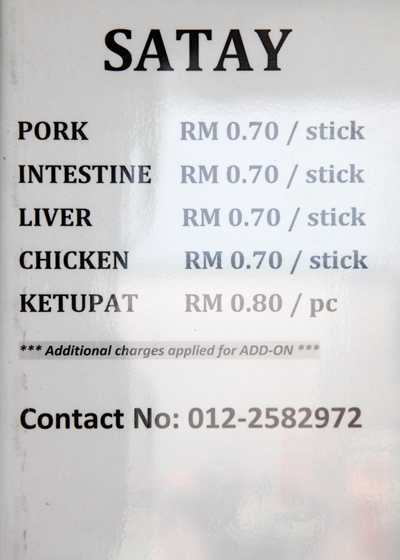
Don’t expect to get beef, lamb or fish satay here, as they only serve four types of satay: pork, intestine, liver and chicken @ 70 cents each. For those on a food excursion, I wouldn’t recommend having this as a main meal considering the never-ending things to try in Melaka. But if you’re really hungry and need to fill up, ketupat is available at 80 cents/pc.
Pork-Satay
There’s only one thing you need to know about the pork satay in Melaka – they are not served with thick and spicy peanut sauce. Instead, the dipping sauce is a rather diluted mix of tangy pineapple and mild peanut sauce.
As for the satay, it’s not exactly mind blowingly good but they are definitely tasty and addictive enough for us to keep munching away. So as long as you get your expectations straight I am pretty sure you will find the satay enjoyable.
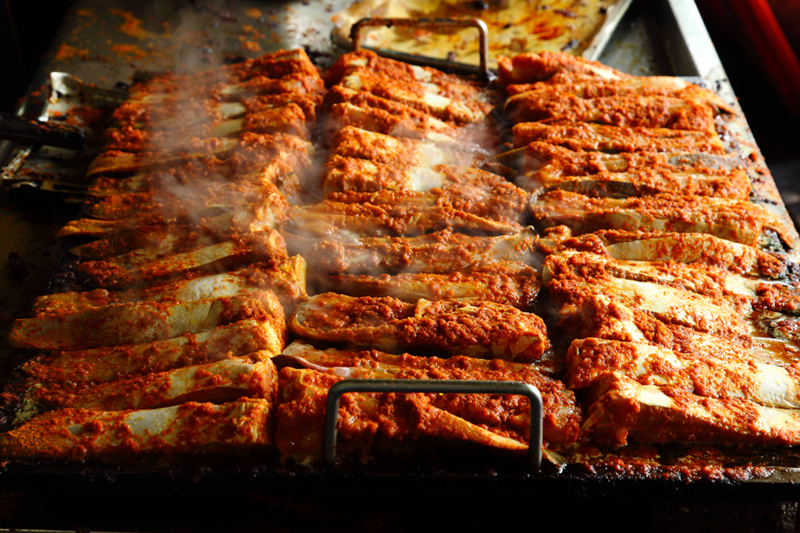
Grilling-Satay
If you are like me and prefer your satay properly grilled with a crispy edge and smoky flavour without being charred, well this one definitely passes.
Lung-Ann-Refreshments
In case you missed their business hours, you could walk over to East & West Rendezvous Cafefor some awesome durian cendol and Nyonya dumpling. It’s only a stone’s throw away just diagonally opposite Lung Ann Refreshments.
Pork Satay @ Lung Ann Refreshments
807, Lorong Hang Jebat
75200 Melaka
Tel: 012-258 2972
Business hours: 1pm to 5pm (off days not fixed)

Monday, 25 May 2015

Ah Heng Steamed Cup Rice (亚恒烧腊蒸饭) @ Kedai Kopi Bukit Mertajam

After having a few good days in Penang enjoying all the good food, it’s time to head back home. Two insisted to bring us for food in Bukit Mertajam where he says one can find “good & super reasonable” food stalls. Must trust him since he’s there almost daily!
First, we stopped by this little shack selling chu char (煮炒) but we were  a little late as they were closing for the day! Good food sells out earlier I guess! As we were surveying around, we saw this stall selling “Steam Cup Rice” (烧腊蒸饭) so we just give it a shot without wasting much time.
Steam Cup Rice with Chicken (鸡飯) @ RM 3.50 ~ Steamed rice (蒸饭) was a little soggy but the  bbq chicken slices are tender and tasty, even without the “dark gravy” sauce that’s supposed to be poured over it. Pickled chilies went well with the meal. Simple and tasty!
Accompanying Gravy & Soup ((自製醬和湯) Soup was ok but the accompanying gravy was rather bland. I won’t mind not having my rice drenched with the “dark gravy” though, that was why I told them to serve it separately so that I may adjust to the amount I prefer. 
Roast Chicken Drum Stick (燒雞腿) @ RM 3.00 (additional order) ~ Ordered another bbq drumstick for E as he was sharing a plate of this Steam Cup Rice with T. The price was absolutely reasonable! You can’t even get a plate of “mixed rice” with this price in KL! Besides roast chicken, they do have another choice which is the roast pork (燒肉) or a combo (肉参鸡).
I poured a little  gravy over the steam rice for photography purpose. The normally served version won’t allow you to see the rice at all as it’ll be completely drenched with the gravy.
Nice and friendly lady boss kept asking where I was from? Her 1st guess was Hong Kong! I just shook her hand and told her she’s so smart!! hahaha! Well, If you happen to stop by Bukit Mertajam (大山腳), you might want to come by this clean, cozy and laid back coffee shop  for a good plate of chicken rice or the famous BM rojak.
  • Ah Heng Steamed Cup Rice (亚恒烧腊蒸饭)
  • Kedai Kopi Bukit Mertajam
  • Jalan Pasar
  • 14000 Bukit Mertajam.
  • Business Hours – 0900-2100
  • GPS Coordinates
  • N05′ 21.756 E100′ 27.630

Wednesday, 22 April 2015

Penang hawker food Mee Goreng @ Bangkok Lane

Just the mention of Mee Goreng and most locals will direct you to the Bangkok Lane Mee Goreng. The mee goreng business has been passed down over several generations and does super tasty mee goreng. It is definitely entertaining to watch the owner / his worker fry mee goreng – one hand tossing and frying the noodles, while the other hand constantly turning the wok in a circular manner!
When served, just squeeze some lime, mix it and you are ready to savour. Even for someone like me who seldom eats Mee Goreng, I can’t help but to finish the whole plate of mee goreng. The noodles was moist and so fragrant, with some decent wok hei. The prawn stock and mashed potatoes gives it a balance of sweet, sour and spicy. And the mee goreng also have cuttlefish which makes it stand out from other mee goreng stalls. One fun fact, the owner knows Hokkien ok. Don’t play play!
Address: 270 Jalan Burma, Lorong Bangkok
Opening Hours: 8am – 6.30pm. Closed on Mondays

Sunday, 12 April 2015

Top 19 Street Food You Must Try in Penang

Penang Food – The Clash of Cultural Cuisine
Penang, Malaysia is an excitingly diverse city, crammed with the juxtaposition of locals, expats and travellers, who are usually coming through from Thailand and Singapore. It’s a bit of a teeming metropolis of cultural hybrids, really. Penang is literally the bustling rougher cousin of the Kuala Lumpur which is a little more serious and ‘businessy’. Slightly less developed and considerably cleaner, Penang is, to be a bit cliché, a diamond in the rough.
Strangely though, and what I find particularly interesting, Penang has a strange development story, which seems to give it even more charm. Founded, as a trading post by Captain Francis Light of the East India Company in 1786, Penang accidentally became quite important to British colonialism, which helped develop it as the diverse jungle of culture that you find yourself travelling around today, especially in regards to its delectable delicacies. Let’s rewind a little before taking you on a tasty treat tour of palatable Penang. Captain Light was actually sent by his bosses to take Thailand as a trading port. However, after a romantic little love affair, he eloped to Penang to settle with his love interest, turning that into the trading port instead. This led to the fusion of cultural delights now available from top hotels all the way down to lowly street food hawkers. Basically, if Captain Light had done what he was told, I wouldn’t be able to bring you this beautifully long list of exotic eateries in Penang!
So now the background is covered, let’s start by introducing the delicious delicacies on offer in this multi-cultural hullabaloo! From backpacker budgets to splurging high society jetsetters, Penang has a dining option for you.
Sampling the Street – The Lower Budgets
Penang is perhaps the most famous, second only to Bangkok, for its wealth of street food. As Westerners, we don’t really understand what street food is and we’re a bit closed minded on the whole affair. Food…from the street?! How preposterous! However the preconceptions of dirty dishes and salacious salmonella are very far from the truth.
Street food is a way of life for most Malaysians. You and me might see it as a novelty but to Malaysians, dining at pop-up street restaurants is an everyday occurrence and one that you should certainly not miss, no matter your budget. For thrifty backpackers and wealthy world travellers alike, it gives you an affordable way to sample authentic dishes and truly see the real culture of Penang. The thing is, with high-end restaurants and hotel dining rooms, you don’t really get to see the culture surrounding you, whereas street food allows you to get a real taste of Penang’s life; after all, isn’t that why we travel? Also, you can try eating with your hands, which is far harder and much messier than you can imagine!
But which are the best and what should you eat?
Assam Laksa

Assam Laksa is an extremely famous Penang dish. In fact, it might be the best well known; it’s certainly one that most locals will recommend so I’m definitely adding it to this list. It’s a spicy noodley soup with tastebud-tickling sour undertones. So, the traditional dish is kind of a thick broth whereas the Penang version is thinner. It’s poached mackerel that stews in the broth with tamarind, lemongrass, chillies and shrimp paste. This is topped with a big dollop of rice vermicelli. It’s been ranked 7th of the best 100 foods in the world so it’s definitely unmissable.
As I said, it’s super famous so you can find it lurking on pretty much any street in Penang. However, Ayer Itam Pasar is said to serve the best Assam Laksa in the whole world. That’s a pretty big claim so it’s worth testing it out.
Mee Goreng

Are you a fan of noodles? If you are, this is one of the juiciest noodly treats in Malaysia. It’s actually quite common in Indonesia and Singapore too, but it’s definitely a must-try while you’re skulking around Penang with a grumbling tummy. It’s made of thin yellow noodles that are all fried up together with garlic, onions, and shallots, with some type of meat, usually prawns or chicken mixed in. It’s also got chilli, egg, cabbage, Chinese cabbage, and pickles in the mix as well to give a variety of different textures and tastes to tickle those taste buds. It basically comes from Chinese chow mein and has evolved into its own Malay dish.
However, I must tell you to visit either Bangkok Lane Mee Goreng stall or Hameed Pata Mee Goreng in Padang Kota Lama. The reason is that both of these little food joints add a kind of Asian sticky red gravy to the mix which gives a spicy/sweet/sour kick to this delicious dish.
Char Kway Teow

Ok, another noodle delight for you. This one is usually served with prawns so it’s a little more of a seafood delight. Its literal translation is ‘stir-fried rice-cake strips’ and that refers to the big fat, flat noodles that it comes with. Although recipes vary from street vendor to street vendor, the general consensus is that this more sloppy noodle dish contains prawns, cockles, beansprouts, Chinese chives, flat rice noodles, egg, soy sauce, chilli, belachan, all fried up in pork lard. This is a bit of a comfort food dish and is high in fat, pretty much due to the pork lard. However, its unhealthiness is mostly weighed out by how tasty it is!
If you’re looking for a real tasty version of this dish, try Ah Leng Char Kuay Teow at Kafe Khoon Hiang. The stall only opens at night but it’s worth the visit as they use duck eggs, which give a creamier flavour.
Hokkien Hae Mee

Another delight from under the sea, Hokkien Hae Mee, is a fried noodley prawn dish which is simply delicious. This is one of those street food specials you’ll hear backpackers and locals raving about and you’ll find it recommended on travel blogs all over the worldwide web. And there is good reason. It kind of a soup-based noodle dish that combines prawns, slices of chicken, squid and fish cake, and water spinach. It was actually brought over the Malaysia from Fujian, China.
This dish is really common so you’ll be able to find it everywhere. It’s pretty uniform so it’s hard to get it wrong, which means it’s delicious wherever you can get your mouth round it. 888 Hokkien Mee at Presgrave Street Hawker Centre is a locally-recommended stall to try this delectable food.
Laksa Lemak

When you’re tempted by a little fine dining, Laksa Lemak is always a good choice in high end restaurants as you’ll find it made with the freshest ingredients and often with interesting twists. It’s a spicy noodle soup dish, which has a slight undertone of curry flavours. This particular Laksa has a sweet coconut milk which is heavily spiced, mixed with a fish gravy. It usually has shrimp or fish sticks in and comes with a chilli paste and coriander.
I’d definitely recommend Living Room Cafe Bar & Gallery as a place to grab a taste of Laksa Lemak. It’s a fusion restaurant so the food has a slightly Western feel to it, but the atmosphere is intimate and quirky with an outdoor feel.
Wanton Mee
Wanton mee is a very famous noodles dish in Penang. In Chinese “wanton” means dumpling and “mee” is translated as noodles. This dish is usually served in a hot broth and is garnished with leafy vegetables, prawns, chicken or pork, pickled green chilies, spring onions and sometimes mushrooms and black fungus. It can be served dry dressed with oyster sauce. The above version is general, as each state in Malaysia has its own version. In Penang wanton mee is served with black sauce with yummy noodles topped with meat and sauce. This is my favorite dish when I am running out of time.
There is a night place that offers very delicious wanton mee – Chulia St. Night Hawker Stalls – an amalgam of Chinese restaurants and food trucks.
Nasi Lemak

There is one very famous rice dish that can be served as breakfast, lunch or dinner. I can’t recommend Nasi Lemak as a snack, because this dish has a very high importance for me. The fragrant rice is cooked in coconut milk and carefully arranged on the plate or on the banana/pandan leaf in order to steal its special natural aroma. Sambal, anchovies, peanuts and hard-boiled egg are other mandatory ingredients. I had a chance to eat vegetarian version with vegetarian mock anchovies, and I was equally very pleased of its usual non-vegetarian taste.
Personally I enjoy this dish at the Ali Nasi Lemak stall as Ali always offer fresh and warm portions and the price is very cheap. It offers five different kind of nasi lemak for each taste: fried anchovies and egg, prawn, chicken, cutter fish and plain. The final product is wisely wrapped in banana leaf.
Roti Canai
Roti canai is an adopted Malaysian flatbread, originally from India. It is also known as roti prata in Southern Malaysia and kerala porotta in India. Roti means bread in many Asian languages, and canai is a derived term from Chennai – an Indian city. This flat bread that is also called flying bread can have circled or square shapes. When I was little my mother would always buy me a piece of simple roti canai, without curry sauce, for breakfast or supper. A little bit of sugar on top of it and it was the most delicious breakfast, sweet or cake – a very important item for my childhood.
I took a drive to Transfer Road in order to eat Roti Canai. I must say that waiting behind 50 people was totally worth their original plain, with egg and banjir roti canai. They always have the tarik – the pulled milk tea with froth.
Char Koay Kak
Char Koay Kak is translated as carrot cake. It is so delicious and Malays are so proud of it that they serve it even in some clothing stores that I visited. I have noticed that Penang has a special version of Char Koay Kak. Carrot cake, locally known as kway kak is made from white radish and rice flour. It is made from stir-fried carrot cake pieces, salted turnips, bean sprouts, eggs, dark soy sauce, a little chili paste and lard.
Each time I visited Burma Road for another portion of Char Koay Kak I had to wait a while, but I know that this dish takes time to be cooked and my time is nothing comparing to their original, delicious and very aromatic Char Koay Kak. A small portion was RM3.00 and a big one RM4.50 – fair enough for its mouthwatering taste.
Oh Chien

As I said before, Penang is a melting pot of cultures and Chinese food has seeped into the everyday food that’s sold all over Penang. Oh Chien is a Chinese omelette dish made from tapioca flour. Basically, it’s mouth-watering. Aside from the omelette itself and the oysters, it’s got garlic, a little chilli paste, some shallots and eggs in it; all fried up and greasy to go!
One of the places I’d recommend for Oh Chien isn’t really a stall as such, but is more of a small low-budget hole-in-the-wall cafe called Kedai Kopi Seng Thor. You can find it on Lebuh Carnarvon; it’s right around the corner from where you’ll be sampling Hokkien Hae Mee!
Popiah

When it comes to Asian food, we’ve all got stereotypes and I think spring rolls are pretty much ingrained as typically Asian for anyone from the western world. Unwilling to disappoint, Penang has its own spring rolls called Popiah which are definitely worth experiencing. They’re made from little porous crepes which soak up all the yummy sweet/savoury juices. It’s made of soybean curd, eggs, vegetable stew and Chinese lettuce, all wrapped up and dipped in sweet sauce, chilli sauce and black sauce. It’s crispy and saucy and yummy!
Famously, Popiah is dished up at Stall 17 of Padang Brown Hawker Centre. You get all the sauces to choose from so you can sample this delight with all the trimmings.
Pasembur

It may seem strange to begin with a salad but that’s the first dish I’m going to highly recommend to you. Pasembur is a Malaysian-Indian salad that’s basically a mess of cucumber, beancurd, potatoes, fried octopus, fried crab, turnip, bean sprouts and prawn fritters, dressed in a nutty-spicy sauce. A combo of under-the-sea delights and fresh crisp vegetables, this dish is not only a healthy, scrumptious sweet/sour delight.
Where can you get it? The best and most well known place is probably Gurney Drive Hawker Centre, which is located next to Gurney Plaza and offers a drove of street food stalls that truly represent the cultural menagerie of food offered in Penang. Street food stalls include Indian, Malay, Mamak, and Chinese cuisine, which gives you the opportunity to sample some of the best cooks without having to traipse aimlessly around the city. With all the choice they offer, definitely don’t forget to get your lips around some pasembur!
Chee Cheong Fun

Now, Chee Cheong Fun has a direct Cantonese translation which can be slightly off-putting for the weaker stomachs. It means: ‘pig intestine noodles’. However, no pig intestines are actually found in the dish. Phew! It’s called this because it’s made from rolled up flat rice noodles that resemble pig intestines. I would probably have found a more enticing name if I invented this concoction! Although that may sound a little bland, the flavour comes from the combo of three sauces blended on top of the noodles: prawn paste, chilli sauce, and a dark red sweet sauce. Honestly, the amalgamation of these three flavours is an explosion of taste in your mouth.
If you want to try this dish, it’s more of a light snack. You need to head over to Seow Fong Lye Cafe where you’ll find a stall outside. Usually it’s an accompaniment, so if you’re hungry, try a few other dishes too.
Penang Rojak

Rojak is a traditional Asian fruit and vegetable salad. It can be found in Indonesia, Singapore and Malaysia. The term “rojak” means mixture in Malay. Penang Rojak is a typical salad that is similar to a fruit one – cucumber, pineapple, cuttlefish, turnip, but has some other ingredients: jambu air, guava, squid fritters, honey and sometimes raw mangoes and green apples. This dish has no bean sprouts and fried tofu puffs. What’s most delightful is the very thick prawn sauce.
One of the popular places to eat this local delicates is Hock Seng Rojak (or Rojak king) – and I assure you its name says it all. The lady chef is very friendly and she will love to cook your fresh rojak instantly.
Cendol

Cendol is a traditional Southern Asian dessert. You can order it in a plate or in a cup. When I am in a hurry I drink it, but when I have plenty of time I enjoy each spoon. Its basic ingredients are coconut milk, jelly noodles, shaved ice and palm sugar. In Penang, this mouthwatering dish also includes red beans, glutinous rice, grass jelly and creamed corn. Despite the fact that this dessert is so sweet and delicious it is also nutritional and healthy. It is suitable for everyone as the ingredients balance makes it not too sweet for diabetics or for children.
I must tell you that Teo Chew Cendol is super famous and offers the best Cendol in Penang for many years and is still the best. The price is only RM1.50, but the original taste will remain forever in your mouth.
Ice Kacang

Ice Kacang is a typical Malaysian dessert, but it can also be found in Brunei and Singapore. This dish is not easy to prepare at home as a special ice machine is needed to churn out the shaved ice. As Air Batu Campur means mixed ice, this dessert is also known as ABC. I found it very interesting that today ice kacang brings colors as initially it was made of only shaved ice and red beans. Palm seed, sweet corn, grass jelly and cubes of agar agar are other important ingredients of Penang’s ice kacang. The coconut milk topping makes this dish mouthwatering.
Ice kacang can be found everywhere at coffee shops, hawker centres, food court and even restaurant offers it! But my favorite place for this dessert is the typical old style Malaysian restaurant – Kek Seng Café. Their secret is serving Ice Kacang with yummy durian ice-cream.
Tau Sar Peah
Penang Tau Sar Peah is a delicious and original bean biscuit. The tau sar refers to the red bean paste found in this food. Red beans become mushy as they are cooked with sugar. There are some different varieties of tau sar biscuits on the market, such as mung bean or lek tau and lotus bean paste. Tau sar peah is made from the same core ingredients as tambun peah; the two differ only in shape. It is best to eat this biscuits fresh and still warm out of the oven. I usually pre-order before my Penang arrival and I assure you this is the best way to eat traditional Penang tau sar biscuits.
Ghee Hiang, Him Heang, Hoe Peng, Lee Hoay Seng, Loong Num, Sin Hock Seng and Xiang Phing Bakery are a few well known places that offer fresh and the most delicious Penang tau sar biscuits.
Experiencing the Elite – The Higher Budgets
When sampling the cuisine of Penang, most traditional dishes can be found at street stalls, but I find it’s sometimes nice to treat yourself to a little fine dining. The thing is with Penang, because the culture is so diverse, fine dining usually becomes somewhat of a ‘fusion’ experience, which is most definitely a bonus in my eyes.
Here are my 2 fine dining picks:
Prawn Malai Curry

As mentioned before, Malay food is usually quite curry based due to the influence of Indian food, or noodle based due to its Chinese ancestors. The Indian food is a must-try with its mouth-watering warmness and tongue-tingling spices. Frankly, I love a good curry, especially when it’s been inspired by Southern Indian cuisine. Prawn Malai Curry is exactly that. It’s a delightfully sloppy dish made up mainly of a cashew nut and coconut milk sauce, richly scattered with shrimp. It seems to combine that lovely crispness you get with seafood and the kind of comfort food feel of curry.
The best Prawn Malai Curry, in my eyes, is from Karaikudi Restaurant. Most of the food is Malay/Indian fusion, drawing on old recipes, yet the restaurant itself has quite an intoxicatingly modern feel.
Udang Galah Redang

Udang Galah means giant freshwater shrimp. That’s the main source of excitement with this dish as the shrimp served up here are enormous! The dish itself comprises of shrimp cooked in a paste which sometimes turns into a coconut-y curry when coconut milk is added. It’s tangy from the lemongrass and ginger, with undertones of deep turmeric and sweet palm sugar. There are always plenty of chillies to give it a kick and shallots from the complementary crunch. This is one of my Malay favourites.
If you want to try this tasty delight, it’s mainly only served in restaurants. It makes sense to try it in House of Udang Galah as it’s their speciality! Here they pride themselves on the fact that you’re served from fresh livestock which makes it feel all the more exciting and gourmet!