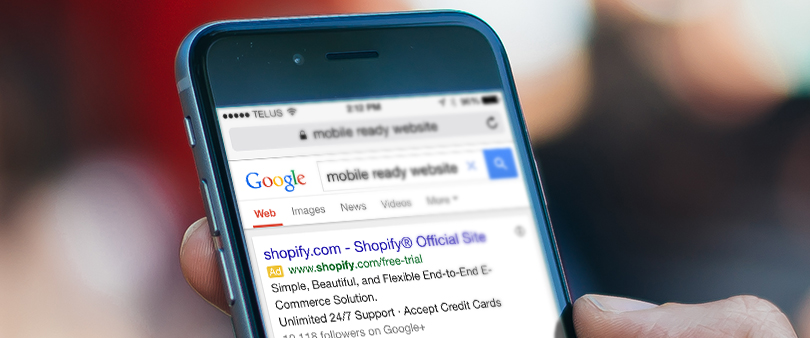
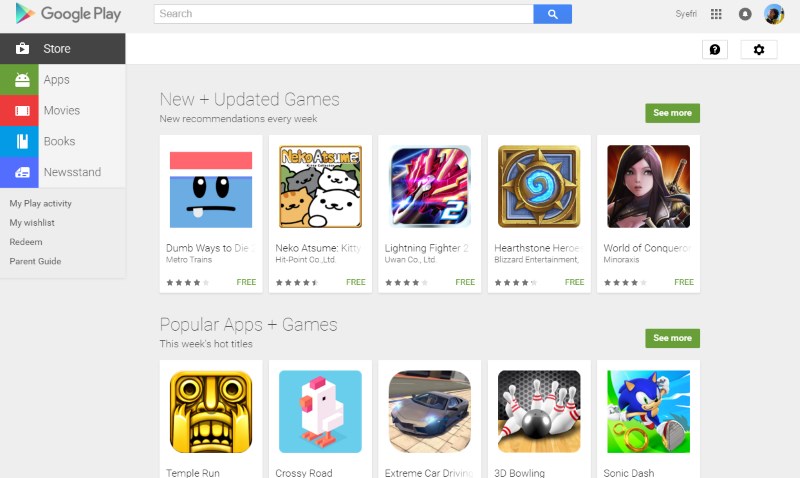
Google is testing a new feature on Android that will allows users to install apps directly from its search results. This skips the step where people are redirected to the Play Store, reducing the amount of time needed to download that one app.
Google’s search results on Android already display an install button when searching for apps; however, this is mainly a shortcut to the appropriate page in the Play Store. This new feature instead causes the usual Android permissions windows to pup up with an install button. At the moment, it appears that the feature only works from the Google app, and not Chrome.
According to Android Police, some users reported that this feature was already live since a month ago or more, but it has only recently become widely available. That being said, it is not yet available for everyone; and there is no telling when the feature will be officially announced.
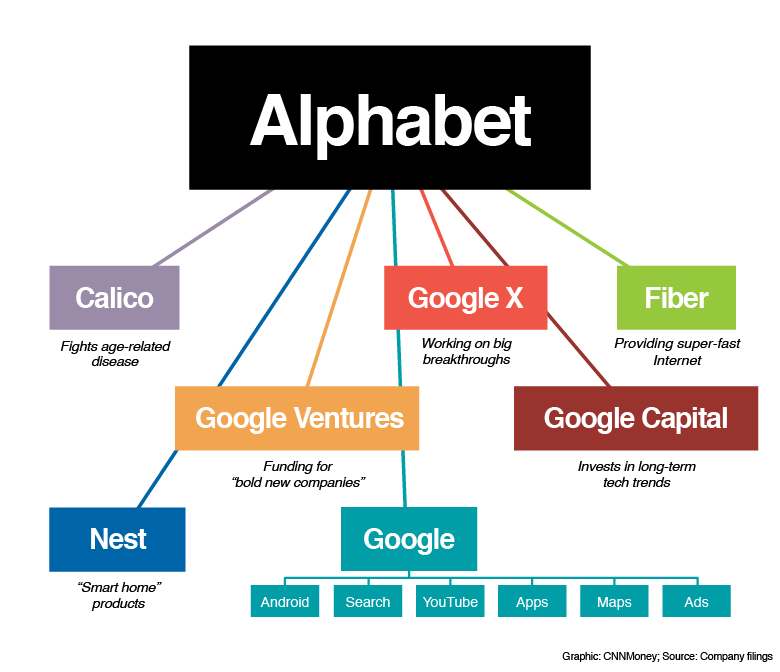
1) Google announced in August that it will restructure its business. At the end of the day on Friday, it will spin out its exotic projects like driverless cars and anti-aging research into separate companies. Alphabet will become the parent company of all of those smaller companies, one of which is Google.
2) Don't worry, you won't notice any changes -- at least for now. At its most basic level, Google is just renaming itself "Alphabet" and creating a subsidiary business called "Google." The new Google will continue as the consumer-facing brand and will run all the products you've heard of, including search, Android, YouTube, Maps and Google Apps.
3) Don't expect to hear much from Alphabet itself. It will be a holding company, with no consumer products of its own. Alphabet doesn't own the rights to Alphabet.com. Its website is abc.xyz, and it's as bare-bones as they come.
4) Alphabet will be organized like Warren Buffett's Berkshire Hathaway. Each business, including Google, will have its own CEO. They will all report to Alphabet CEO (former Google chief) Larry Page, who has been a longtime admirer of Buffett's managing style.
5) Page and fellow Google co-founder Sergey Brin are giving up their reins at Google to take over Alphabet. Page will be CEO and Brin will be president of Alphabet.
6) The new CEO of Google is Sundar Pichai. He's a well-liked executive who's had a meteoric rise since he joined Google in 2004. He led the Google Toolbar team, then Chrome. He was then given control of Android and eventually every Google product not named YouTube. As CEO, he'll oversee YouTube too, although Susan Wojcicki will remain YouTube's chief executive.
7) Alphabet's structure is designed to give each separate business more independence and freedom to grow. In a memo to investors, Page said he wants to make the company "cleaner and more accountable." Since smart home company Nest, the experimental Google X, and age-fighting Calico don't really have much to do with Google's core search business, spinning them off makes a good deal of sense.
8) Google hired a big-time chief financial officer from Wall Street a few months ago. Ruth Porat, now the CFO of Alphabet, had said that she wanted to add more transparency to Google's business. Alphabet's new structure will give investors a better understanding of how well each of Google's former "side projects" (now Alphabet subsidiaries) are performing, as well as more clarity about Google's core business.
9) The Alphabet move was done in part to appease investors. Shareholders had been growing increasingly anxious about Google's funding of "moonshot" investments that may never pay off. Since 90% of Google's sales came from advertising, Page was criticized for not devoting more of his time to search. Now, Google will be a separately run company without its CEO worrying about those "side projects."
10) Shares of Google will begin trading as Alphabet under the same "GOOGL" ticker beginning on Monday, October 5.
Google unveiled its redesigned Chromecast video-streaming device on Tuesday with new bells and whistles.
In addition to a revamped look, the device has a "Fast Play" feature, enhanced Wi-Fi and easier content discovery. This brings the Chromecast deeper into Google's family of smart-home devices.
The Mountain View, California, company showed off the Chromecast alongside its new Nexus 5X made Nexus 6P smartphones at an event in San Francisco. This marks Google's move back to holding a formal event to unveil its flagship devices for the year. The company chose not to hold a similar event last year, and instead just announced the devices on its corporate blog.
For Google, Tuesday's event was critical as it tries to get its devices in the hands of more consumers. Unveiling new gadgets like its Nexus smartphones allows Google to push its core products, like Search, Maps, YouTube or its Google Play marketplace, to more people. Its Chromecast device gives Google a good way to get its tech into people's living rooms, which have become a heated battleground for Silicon Valley giants including Apple, Amazon and Samsung.
Google first introduced the Chromecast about two years ago and has since sold more than 20 million of the devices globally, said Mario Queiroz, Google's vice president of product management. The $35 (or AU$49 and £30) gadget lets people wirelessly beam content from services like Netflix, HBO Go and YouTube to a TV from a smartphone, tablet or laptop. It originally looked like a USB-thumb drive, but is now a small circular device with an attached HDMI cable.
"We've redesigned the Chromecast to bring a modern new look," Queiroz said. "The small size of the new Chromecast allows for it to hide behind the TV."
Besides the new design, Google added several features to the device. It has hardware that "significantly improves" its Wi-Fi performance with a new adaptive antenna system, Queiroz said. A "Fast Play" feature makes sure the Chromecast starts up quicker. This means that when users are nearing the end an episode on Netflix, for example, the app automatically starts to load the next episode so it's ready to play when that first episode is over.
Queiroz said there will be more content on the Chromecast now, including all of Showtime's shows and more sports and music. The company is additionally upping its gaming content with new games and a feature that lets people use their smartphone as a game controller. The Chromecast also now supports Facebook, Flickr and Google photos, so users can project pictures from their phone onto their TV.
Google also redesigned the Chromecast app. New features include a "What's On" discovery component and a "devices" tab that lets people use their phone, tablet or laptop as a remote for the Chromecast.
With its new features, the Chromecast plays directly into Google's strategy for getting its technology into people's homes. Some of Google's devices, such as its Nest Internet-connected thermostat, are on the cutting edge of all-in-one connected home devices. Others, like the Chromecast, turn devices like the television already in your living room or bedroom into smart gadgets.
As the Internet expands even further into people's lives, the tech industry's largest companies have focused on building devices and services for people's homes. For example, Apple's Homekit, a software package on iPhones and iPads, lets you turn your living room lights on and off, while its Apple TV lets you call out to your television when you want to watch an episode of "Game of Thrones." Amazon has offerings with similar functions.
Smart homes are still far from mainstream though. In 2014, 34 percent of US consumers said they were interested in a digital system to control all the lights in their house, according to Forrester Research, but only 1 percent actually had such systems. Only 2 percent had tried a digitally remote-controlled energy management system.
Google's new Chromecast comes in three colors: black, lemonade and coral. It's available starting Tuesday for $35 (or £30) in 17 countries. The new Chromecast app will roll out over the next few weeks on Andriod and iOS.
In addition to its revamped Chromecast video-streaming device, Google also showed off a new music-streaming device called Chromecast Audio. Go to CNET's Google page to see all of today's Google's news.
A FEW DAYS ago Mark Zuckerberg, Bono, Bill Gates, Richard Branson and a host of other business leaders signed a declaration calling on world leaders to bring the Internet to the entire planet’s population by 2020. There’s certainly no shortage of schemes for making this happen. Facebook is building solar-powered drones that act as flying Wi-Fi hotspots. Branson is backing OneWeb, a company that plans to launch hundreds of low-orbit satellites to blanket the entire globe with Internet access. Elon Musk’s SpaceX is looking into much the same thing. Google, not to be left out of all the fun, is readying Project Loon, a fleet of high-altitude balloons designed to bring the Internet to remote areas. But the company also has a more down-to-earth project.
Today Google announced that it’s hard at work trenching pipe for a fiber optic network to serve the cities Accra and Kumasi in Ghana as part of its little-known Project Link initiative, which already provides broadband Internet to Kampala, the capital of Uganda. And while it may be boring compared to drones and satellites, it has the potential to improve access to the millions of people living in these cities.
“The goal is to bring abundant Internet access to the people who need it most,” says Google Ghana country manager Estelle Akofio-Sowah.
Google broke ground on the new 1,000-kilometer fiber network in June and is on track to offer the service to its first customers by the end of 2016, according to Akofio-Sowah.
Unlike Google Fiber, which sells high-speed Internet directly to consumers in a handful of US cities, Project Link sells broadband capacity to other Internet service providers and mobile carriers. In other words, it’s an Internet backbone provider, aimed at bringing the Internet to developing nations the old-fashioned way: with pipes full of cables buried in the dirt. Some analysts believe this will be a cheaper and far more reliable way to bring broadband Internet to the four million people who don’t yet have access than more experimental projects like satellites and drones.
Africa’s broadband capacity has already gotten a massive boost in recent years from new undersea cables like Seacom on the continent’s east coast and Main One on the west coast. But bringing that capacity from the coast into the continents’s cities is another problem entirely, and that’s the issue that Project Link is trying to solve. Google certainly isn’t alone in trying to bridge this gap. The Mauritius-based company Liquid Telecom, for example, is working to bring broadband to landlocked countries like Zambia. But with any luck, Google’s involvement could help attract more investment on the continent.
The first Project Link network, quietly announced in late 2013, brought more broadband to the landlocked country of Uganda. Ghana, on the other hand, is one of the continent’s better connected countries, with multiple undersea cables connecting the nation to the rest of the world. Still, Akofio-Sowah, who was the managing director of the Ghanaian Internet service provider Busy Internet before joining Google, says that Internet capacity hasn’t really reached the public yet and that Internet access in the country is still too unreliable and inexpensive for most. “There are people who want to use the Internet, build apps, run their businesses online,” she says. “But they simply can’t.”
By piping additional bandwidth into Ghana’s largest cities, Project Link will ideally make Internet connections both cheaper and more reliable. But there may still be a role for Project Loon, which Akofio-Sowah says would be useful for bringing Internet access to more remote parts of the country.
“I would love to have some balloons fling over Ghana,” she says. “But unfortunately I’m not the decision maker on that one.”
You may soon be able to unlock your Android Lollipop 5.0 phone simply by saying "OK Google." That probably sounds useful, but it doesn't sound all that secure. In fact, it isn't, based on screen shots of the setup process published by Android Police.
Google hasn't officially announced the feature, which is called Trusted Voice. It appears to be an addition to the other Smart Lock options found in Android 5.0 that arrived with version 7.0 of Google Play Services. Android Police notes that a few people have reported gaining Trusted Voice and that it's likely to be rolling out in a slow, controlled fashion.
Trusted Voice will join other ways to unlock your Android phone or tablet running the Lollipop software. Trusted Places keeps your device unlocked in certain locations, such as at home, while enabling On-Body Detection does the same when your phone is in a pocket; place it on a table, however, and it will lock.
It's good that Google is creating different choices to give people faster access to their phones and tablets. And the "OK Google" feature is actually quite good at working only with a device owner's voice. After training my Moto X to recognize my voice, I have yet to see (or hear) anyone else get it working with their voice. We've tried to fool it but no dice.
Still, as Google notes on the setup screen, a recording of your voice could unlock the device. So too could a similar voice. As a result, I don't expect many people that carry an Android phone to the office to use Trusted Voice. Even home workers like me will have to think twice before using it.
Google’s plans of becoming a mobile operator are officially confirmed, but the company is yet to make it MVNO network available to customers. Even so, a new Android application has been discovered inside a mid-February Lollipop build for the Nexus 6, with Android Police unearthing some exciting details about Google’s upcoming carrier initiative. From the looks of it, Google has some interesting ideas to convince you to dump your regular operator in favor of its yet-to-be-named service, which might turn the Search giant into a brand new, but much smaller, “uncarrier.”
According to data discovered inside a new Android app that’s yet to be available to users, Google’s MVNO service is referred to internally as Project Fi, while the app is called Tycho. References to Nova, also a codename for Google’s MVNO project, are also found inside Tycho, though the publication speculates the service will have a straightforward Google Wireless product name.
The Tycho app is basically a carrier app that lets users turn on and off the service, view details about their accounts, add lines, switch devices, share data with other devices, print statements and more.
In it, the publication found code lines that confirm Google is indeed buying cellular data from T-Mobile and Sprint in the U.S. with other operators not being named. Google’s wireless service will actively switch from Sprint to T-Mobile and back in order to offer customers the best possible coverage in their area.
Furthermore, Google apparently plans to use Project Fi to increase Nexus 6 sales, offering potential buyers an interest-free device financing option that would let them pay for the more expensive handset over time. Other handsets aren’t mentioned in this version of the code.
When it comes to actual service rates, Google appears ready to come up with some competitive offers that might certainly appear to a certain set of smartphone users. Google may charge customers only for what they use, and even credit them back for unused data at the end of the month.
In case they exceed data plans, users will be charged the same flat fee for each additional gigabyte, and Android Police says there aren’t any “artificially hiked up overage fees” present in the code.
Plans also start with a flat rate to enable talk and text, with calls in the U.S. available free of charge, while international calls being charged at a low rate.
From the app, users can add and manage multiple lines and share data among them, which is an unusual offer from a MVNO carrier. Interestingly, a data-only service option will also be available to a user, who could split his or her allotted data among various devices, including smartphones and tablets, without counting these activations as additional lines.
Android fans who own multiple smartphones, or who keep jumping on to the next big thing, will be happy to hear that switching devices is also possible from inside the app. In fact, all devices can remain on the same Project Fi plan, with users able to select the primary one, which will receive calls and texts.
Finally, there’s also some Google “evilness” involved in it becoming a wireless carrier, and that’s tracking your calls for advertising purposes. But the great thing about it is that Google plans to let you opt out of it from the start. That means you can either let Google see your call log, and offer relevant ads based on the business-related phone numbers it contains, or not.
It’s not clear at this time when Project Fi will be available to users – or what it’ll be called once it’s launched – and the details discovered in this app file are yet to be officially confirmed. But Google may make its MVNO initiative one of the main announcements at Google I/O this May, at which point it’ll likely reveal everything there is to know about it.
After complaints from Google about Oregon's tax rules, the state yesterday enacted a bill to address Google's concerns about building a fiber network in Portland and five nearby municipalities.
The bill, signed yesterday by Gov. Kate Brown, "exempts 'gigabit' Internet service like Google's from a thorny property tax that dates to the 1970s and was originally intended for microwave towers," The Oregonian reported. Until the change, there was "an unusual Oregon tax methodology that values companies based—in part—on 'intangible' assets such as the value of their brands. For huge companies like Google, that might have added tens of millions of dollars to their annual property tax bill."
Oregon's first attempt to change the rule backfired, when Google told lawmakers that proposed legislation would only provide relief temporarily and that "after a certain time period tax rates would return to approximately double what they are in other states." Lawmakers said they would change the bill to address Google's concerns, and they did.
Portland has approved a Google Fiber franchise "that exempts the company from some of the fees and service requirements Comcast faces" and "reworked transportation regulations to allow Google Fiber to put 200 utility cabinets along big city streets," The Oregonian article said.
Google Fiber is available in Kansas City, Austin, and Provo, Utah. Google has committed to building in five additional metro areas and still lists Portland as a "potential fiber city," along with three others that the company is considering.
Google has formally opened its second data center in the Dalles, Oregon, twice as big as the Gooogle data center in the Columbia River Gorge community. The cost of the expansion is believed to be $600 million, according to The Oregonian (signup required).
The company’s astronomical data center investments indicate how fast its internet services continue to grow. Google announced the Oregon expansion in 2013.
Oregon was home to the first Google data center that was owned and operated by the company under its initiative to build its own energy-efficient infrastructure that kicked off in 2006. That project has been one of the data center industry’s most photographed facilities. Several projects from other big tech giants like Apple, Amazon, and Facebook followed, firmly placing the state on the data center map.
Last year Google did a “rip and replace” upgrade of the electrical infrastructure to boost its server capacity in Oregon.
Google paid $1.2 million to the city, Wasco County, and the local school district in a 2013 tax break deal ahead of the latest data center. Google will pay $800,000 annually following the initial payment. The approved package could save Google tens of millions over the deal’s 15-year lifespan.
Dubbed the Silicon Forest, the region features low-cost power, moderate climate, and good tax breaks for data center operators. The recent data center exemption from central assessment makes the region all the more attractive.
Google invests billions of dollars in data centers every year. The company went from slightly north of 100 servers 15 years ago, when it was founded, to spending about $5 billion per quarter on building and operating its data center infrastructure.
A recent report revealed that the level of infrastructure spending has led to some major funds cutting stake in the company.
Google is currently considering an expansion in Atlanta, where Douglas County officials recently approved a package of tax breaks for the potential project. Other recent data centers in the works include its first company-owned facility in the Netherlands and a reported $66 million project in Taiwan.
Other major expansions include but are not limited to: a $600 million expansion in Berkeley County, South Carolina; $390 million in new data center construction in St. Ghislain, Belgium; another $400 million in construction in its campus in Lenoir, North Carolina; $400 milllion in additional expansion spending in Council Bluffs, Iowa.
Earlier, Apple was reported to be resuming expansion in Prineville. Multi-tenant data center provider ViaWest announced it was building in Oregon in February. Oregon’s data center boom continues following a few months of stutter during the central assessment controversy.