Advertisement

Showing posts with label amazon. Show all posts

Sunday, 4 October 2015

Amazon new 7-inch tablets to benefit Taiwan, China supply chain makers

Amazon has launched a new 7-inch tablet for sale at as low as US$49.99, a campaign which is likely to benefit supply chain makers in Taiwan and China, according to industry sources.
Amazon is expected to take deliveries of the 7-inch tablet in large volumes, as it did for the previous e-book readers and old tablet models, in order to meet expected large orders coming from the Internet, indicated the sources.
Taiwan-based TFT-LCD panel maker Chunghwa Picture Tubes (CPT) and China-based touch display maker Jiangxi Holitech Technology are the two major display suppliers for the new tablet, which is powered by a 1.3GHz quad-core CPU.
China-based mobile device maker Huaqin Telecom Technology is the main producer of the 7-inch tablets, revealed the sources.

Saturday, 3 October 2015

Amazon’s Supply Reordering Service Gets Integrated In Nearly A Dozen More Household Devices From GE, Samsung, Oster And More


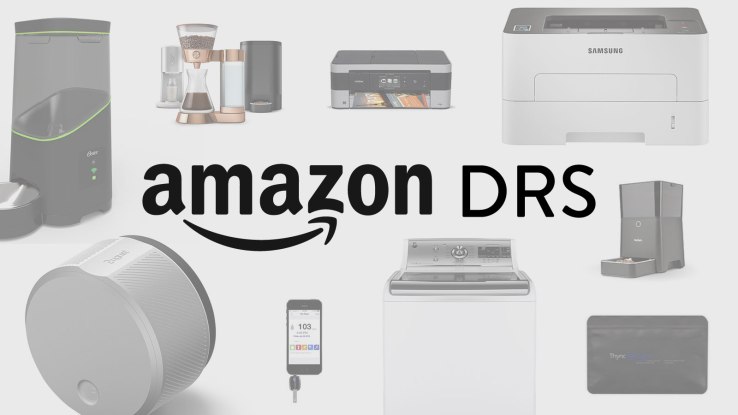
Amazon this morning announced a significant expansion of device partners that will support its Dash Replenishment Service – the initiative that enables connected household devices to monitor their supply levels and automatically reorder when those supplies run low.
For example, printers can reorder ink just before you run out. Your Brita water pitcher can reorder a new filter as the old one goes bad. Today, Amazon says that it has added eleven new brands to the program, including General Electric, Samsung, August, Gmate, Oster, Obe, Petnet, CleverPet, Sutro, Thync and Sealed Air.
The new partners are in addition to the much smaller handful that were already participating in the program: Brother, Whirlpool and Brita.
With the expansion, consumers will soon be able to buy things like washing machines that automatically order detergent, smart locks that send you replacement batteries, pet food dispensers that ship you new dog food, and more.
For the Dash Replenishment Service (or DRS) program to work, manufacturers create connected devices that are capable of detecting and measuring consumable usage by way of infrared sensors, scales or other mechanisms, Amazon explains. They then integrate Amazon’s DRS APIs by adding as few as 10 lines of code to their software, which allows them to connect to Amazon’s infrastructure to fulfill their customer’s orders, as needed.
For example, GE’s smart washer is an ideal candidate for this type of service. Designed to make doing laundry more of an automated experience, the washer automatically dispenses the right amount of detergent for each load, lets customers work the washer through a mobile app, tracks supply levels, and then orders more detergent when supplies are low.
DRS is the same reordering service that also powers Amazon’s consumer-facing Amazon Dash Buttons, which are the hardware dongles you can mount or hang around your home to reorder everyday supplies like paper towels, trash bags, diapers, and more.
dash-button
With the new brand partners, there are a number of interesting implementations now in the works, including the above-mentioned GE high-efficiency washer; an August Smart Lock whose app will notify you to change your batteries and order them for you; a Gmate SMART Blood Glucose Meter that will reorder testing supplies; several pet food dispensers from Obe, Oster, Petnet and CleverPet that measure food and water consumption and reorders the food as needed; Samsung Laser Printers that automatically ship you new toner; a Sutro pool monitor that automatically orders pool chemicals; Thync’s de-stressing wearable that auto-orders new strips; and Sealed Air’s hand soap and hand sanitizer dispensers that automatically reorder the soap or sanitizer.
At this time, these companies have committed to launching DRS-enabled devices, but products are still arriving to market. An Amazon spokesperson confirms that the first ones will arrive later this year.

Saturday, 19 September 2015

MediaTek chipsets power new Amazon devices

MediaTek has announced that its chipset solutions will power an array of Amazon consumer products, including the Amazon Fire TV, and Fire HD 8 and Fire HD 10 tablets.

The new Amazon Fire TV is powered by MediaTek's MT8173, a 64-bit quad-core processor and a multimedia SoC with ARM's Cortex - A72 cores. The Fire HD 8 and Fire HD 10 tablets are powered by MT8135, an up to 1.5 GHz quad-core processor.

"MediaTek and Amazon are focused on providing a premium user experience for consumers," said Joe Chen, senior VP of MediaTek. "With MediaTek's processing power at the core of these products, we're confident that Amazon customers will be better served in efficiency and performance."

The MT8173 meets growing demand for 4K Ultra HD content and graphic-heavy gaming, bringing incredibly fast performance to the Amazon Fire TV, according to the vendor.

Amazon has previously utilized MediaTek's line of chipsets for the Fire HD 6, Fire HD 7 and Fire HD Kids Edition tablets.

Tuesday, 14 April 2015

Amazon starts selling desktop software… in the cloud

Amazon today announced the launch of a new Marketplace for desktop apps as a service. Amazon is selling subscriptions to software including Visual Studio and Office, paid on a monthly basis.

The software is run on the virtual desktop infrastructure service that Amazon launched last year, AWS WorkSpaces. These subscriptions start at $25 per month for a virtual Windows 7 desktop (provided by Windows Server 2008 R2). Adding, for example, Office 2013 Professional Plus from the AWS Marketplace is another $15 per month.

To go with the Marketplace, Amazon has released a new tool called WorkSpaces Application Manager (WAM). With WAM, administrators can subscribe to apps for their users, mark certain apps as "required" so they'll be deployed automatically, make other optional apps available for users to provision themselves, and manage updating and auditing. WAM can be used with both applications from the Marketplace and in-house apps.

The applications themselves are virtualized, so are isolated from both the underlying operating system and each other. This in turn streamlines maintenance of those apps; patches and updates don't need to be rolled out to dozens or hundreds of users, instead needing only to update the master image.

Before the Marketplace for desktop apps was available, organizations could still deploy paid apps into WorkSpaces, of course, but these deployments had to be managed and tracked separately. With WAM, the bill for, say, Office just gets added to the monthly AWS bill.

Amazon promotes its VDI as a kind of logical extension of AWS; companies are already moving servers to the Amazon cloud, so why not do the same with their PCs too? The two aren't directly analogous, as users will still need some kind of device on their desks to access VDI desktops, but with VDI the PC replacement lifecycle can be extended even further, and full-fledged PCs can be replaced by dumb terminals (though with these dumb terminals often costing as much or more than PCs, their appeal is limited). There can also be security implications; if laptops are used only to access VDI resources, they needn't contain any sensitive data themselves and, so, can expose companies to much less risk when they're lost or stolen.

The growth of VDI won't necessarily challenge software companies—Microsoft still gets its license money whether Office is being used on a virtual desktop in the cloud or a physical one on premises—but it applies yet more pressure to the already struggling PC vendors.

Amazon’s Echo speaker is now also a smart home hub

Amazon's Echo has seemed like a strange product since its announcement last year, but with an update this week, it's beginning to make a bit more sense. The voice-controlled speaker and smart assistant is now able to wirelessly control a variety of smart appliances that work with Belkin's WeMo and Philips' Hue connected home systems, according to Engadget. So far, the supported products include just lights and power switches, but those are also two of the more common connected home products — they're also among the easiest to start using. The smart appliances can all be controlled through voice commands to Echo.


This is a basic first step, but it's very much a start toward transforming Echo into something of a smart home hub. That gives Echo more of a purpose than ever — before now, the $199 device was little more than a speaker that could also duplicate some functions of Siri. It was always clear that Echo needed more to it, and given that Amazon still isn't selling it to anyone who hasn't first requested an invitation, it seems like Amazon has been aware of that as well. It's unlikely that controlling smart home devices will ever become Echo's core purpose, but it certainly makes the speaker a lot more interesting for those who own it.

Sunday, 12 April 2015

Amazon gets green light from US regulators for new drone tests

Amazon has won approval from U.S. federal regulators to test a delivery drone outdoors, less than a month after the e-commerce powerhouse blasted regulators for being slow to approve commercial drone testing.


The Federal Aviation Administration had earlier given the green light to an Amazon prototype drone in March, but the company told U.S. lawmakers less than a week later that the prototype had already become obsolete while it waited more than six months for the agency's permission.

The FAA granted Amazon's request to test delivery drones in a letter dated Wednesday, posted on the agency's website.

Amazon must keep flights at an altitude of no more than 400 feet (120 meters) and no faster than 100 miles per hour (160 km per hour), according to the letter.

Seattle-based Amazon has been pursuing its goal of sending packages to customers by air, using small, self-piloted aircraft, even as it faces public concern about safety and privacy.

The company wants to use drones to deliver packages to its customers over distances of 10 miles (16 km) or more, which would require drones to travel autonomously while equipped with technology to avoid collisions with other aircraft.

In February, the FAA proposed long-awaited rules to try to set U.S. guidelines for drones, addressing growing interest from both individual and corporations in using unmanned aerial vehicles.

Amazon did not immediately respond to requests for comment.